

In hardware accessories and fluid transmission systems, brass is favored for its excellent comprehensive performance, and brass outlet tube is a typical representative. This article will explore the performance characteristics, wide application and manufacturing process of brass outlet tubes in depth, aiming to provide valuable reference for related industries.
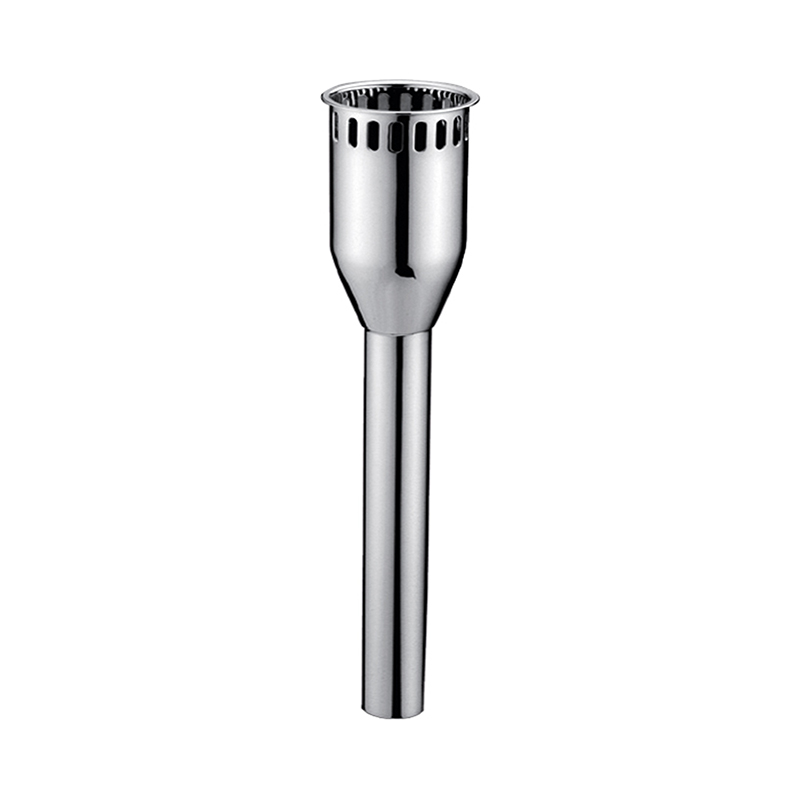
Brass is an alloy composed of copper and zinc, and its composition ratio can be adjusted according to specific needs to obtain different physical and chemical properties. Generally speaking, brass has good corrosion resistance, high strength and hardness, as well as good processability and plasticity. These characteristics make brass an ideal material for manufacturing outlet tubes.
The performance advantages of brass outlet tubes are mainly reflected in the following aspects:
Corrosion resistance: Brass has strong resistance to a variety of chemical substances and is not easily corroded, thus ensuring the long-term stability and service life of the outlet tube.
High strength and hardness: Brass outlet tubes can withstand certain pressure and mechanical shock to ensure the safety and reliability of fluid transmission.
Excellent processability: Brass is easy to cut, bend and weld, and can be processed into various shapes and sizes to meet different installation requirements.
Aesthetics: Brass has a bright golden luster. After polishing or electroplating, it can present a more beautiful appearance and enhance the overall texture of the product.
Brass outlet pipes are widely used in many fields. In household and commercial water supply and drainage systems, brass outlet pipes are widely used to connect faucets, showers, toilets and other sanitary ware due to their corrosion resistance and high strength. In addition, brass outlet pipes also play an important role in HVAC systems, refrigeration equipment and industrial fluid transmission systems. These applications require not only good physical and chemical properties of the outlet pipe, but also the ability to adapt to various complex environments and installation conditions.
In terms of manufacturing process, the production of brass outlet pipes usually includes alloy smelting, casting or extrusion molding, machining, surface treatment and other links. Among them, alloy smelting is one of the key steps, and the ratio of copper and zinc and the addition of other trace elements need to be precisely controlled to obtain a brass alloy that meets the requirements. Casting or extrusion molding is carried out according to the shape and size of the product, and machining is used to further accurately process the inner and outer walls and connection end faces of the water outlet pipe. Finally, surface treatment such as polishing and electroplating are used to improve the aesthetics and corrosion resistance of the water outlet pipe.
With the advancement of science and technology and the development of the industry, the manufacturing process and performance of brass water outlet pipes are also constantly improving and improving. For example, by adding other alloy elements or adopting advanced heat treatment processes, the strength and hardness of brass water outlet pipes can be further improved; and by improving surface treatment technology, the corrosion resistance and aesthetics of water outlet pipes can be improved.
In summary, brass water outlet pipes occupy an important position in hardware accessories and fluid transmission systems due to their excellent performance, wide application fields and continuously improving manufacturing processes. In the future, with the continuous development of related technologies, the application scope of brass water outlet pipes will be further expanded and their performance will be continuously improved.